How Do Reward Apps Actually Make Money? The Ad Model Explained
How do reward apps pay you without charging you? We explain the ad revenue share model in plain English, step by step, plus how to spot a scam.
 Saathi Games Team
In this article
How do reward apps make money when you never pay a thing? You download an app, watch a few ads and get paid. No subscription, no deposit, no catch, at least on paper. If your first thought is "this cannot work", you are asking the right question.
Real money does change hands in reward apps. The mechanics are just not obvious. This guide explains where the money comes from, why apps share it with you, why earnings vary, and how to spot apps that run a scam instead of a business.
How Do Reward Apps Make Money? The Basic Deal
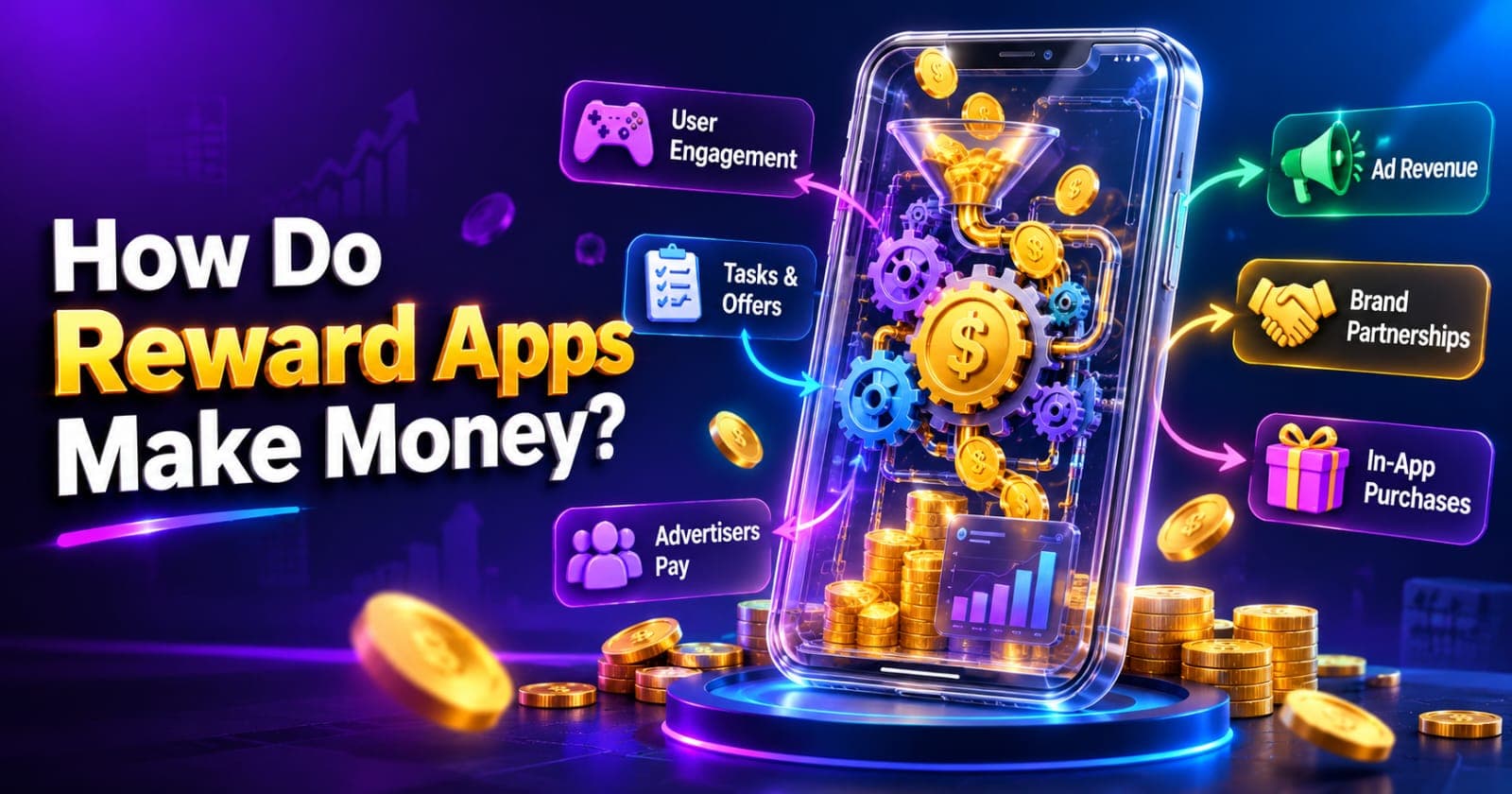
The whole model rests on one simple trade. Advertisers want your attention, and they will pay for it.
Think about free TV. Channels air shows because advertisers pay to run ads in the breaks. The channel gets paid whether or not you buy anything.
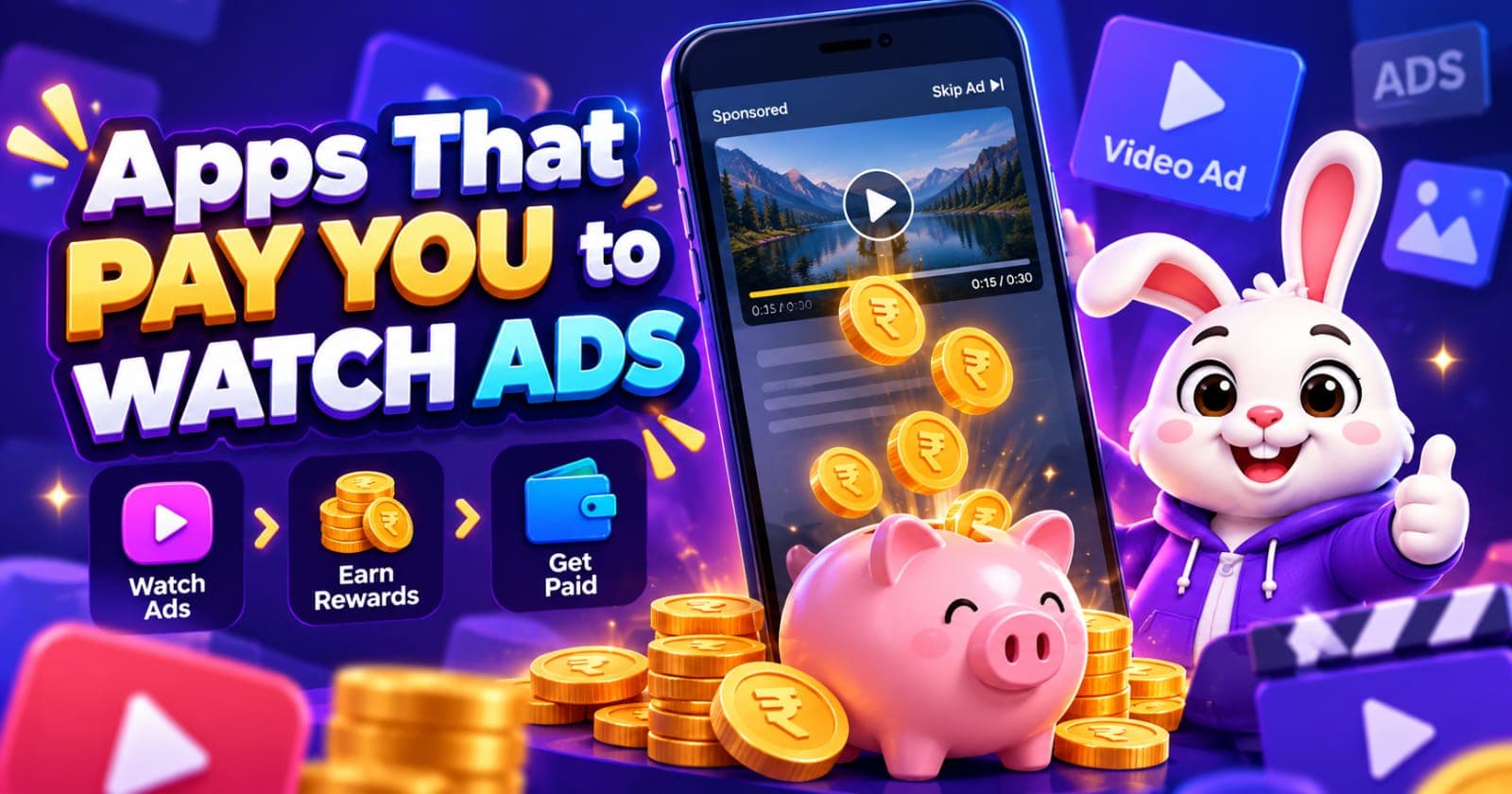
Reward apps work the same way, with a twist. Instead of making costly shows, they attract you by sharing the ad money directly. You watch a 30-second video ad. The advertiser pays the app. The app passes part of that payment to you as coins or points.
It is not charity or magic. It is a well-known business model, and reward apps sit in a small corner of the huge mobile ad market.
How Do Reward Apps Get Paid? Step by Step
Follow the money from the advertiser to your wallet.
Step 1: The advertiser sets a budget. Say a mobile game studio wants new players. It sets aside part of its marketing budget for mobile ads.
Step 2: The advertiser pays an ad network. Ad networks such as Unity Ads, ironSource, Meta Audience Network, Start.io, Liftoff and Chartboost place ads across thousands of apps. Advertisers pay per thousand views (CPM), per click (CPC) or per install (CPI).
Step 3: The network serves ads inside the reward app. The app adds the network's software kit, called an SDK, to its code. When you tap "watch ad", the network sends a video and records that you watched it.
Step 4: The network pays the reward app. First it checks that the view was real: a real person on a real device. Then it pays the app a small amount. That is usually a fraction of a cent to a few cents per view, based on the ad type and where you live.
Step 5: The app shares the money with you. The app keeps part of it for development, servers and profit. It credits the rest to your account as coins. Save up enough, and you redeem them for cash, gift cards or vouchers.
Offerwalls Add Another Layer
Many reward apps also have offerwalls. These are task lists from providers like PubScale, Tapjoy or OfferToro. A task might be installing an app, reaching a level in a game or finishing a survey.
Advertisers pay much more for these actions, sometimes $1 to $5 per task, because they show real interest. A quick ad view shows much less. The app and the offerwall provider split the payout, and your share shows up as coins.
Why Earnings Vary by Country
A friend abroad may earn more or less than you on the same app. This is not random. It comes down to ad rates.
Advertisers bid different amounts based on where the viewer lives. A user in the US, UK, Canada or Australia is worth more to most advertisers than a user in many other places. The reason is economic. People in higher-income markets are more likely to buy, subscribe or spend inside apps.
That creates a rough tier system:
- Tier 1 countries such as the US, UK, Canada, Australia and Germany see the highest rates. Video ad CPMs can reach $10 to $30 or more.
- Tier 2 countries, such as parts of Eastern Europe, Latin America and Southeast Asia, see middle rates.
- Tier 3 countries, such as parts of South Asia and Sub-Saharan Africa, see the lowest rates, sometimes under $1 CPM.
So a viewer in New York and a viewer in Delhi can watch the same ad, and the New York view will usually earn the app more. The reward app does not choose this. Either way, it helps to pick an app with payout options that work where you live, such as UPI in India or PayPal in many other countries.
Why Some Reward Apps Are Scams
Not every app that promises rewards follows the model above.
The deposit trap. The most common scam asks you to deposit money to "upgrade" your earnings or to withdraw. Real reward apps are funded by advertisers, not by you. If an app wants payment before it pays you, walk away.
Wild promises. Any app that says you can earn $50 or $100 a day from ads is lying. If an ad view earns a fraction of a cent, eight hours of ads would not come close.
The endless threshold. Some apps let your balance grow but set a withdrawal minimum you never reach, or keep raising it. The app earns from every ad you watch, and you never see a cent.
Data harvesting. Some apps ask for far more access than they need, such as your contacts, SMS, files and location. They make money from your personal data instead of, or on top of, ads.
For a full checklist, read our guide on how to spot a fake earning app.
How Do Reward Apps Stay Sustainable?
A lasting reward app has simple maths. Ad revenue must be more than the rewards it pays out, with enough left for running costs. Here are the signs to look for:
- A clear revenue story. The company says it earns from ads and shares part of that with you.
- Several ad partners. A mediation platform, such as Unity LevelPlay, managing several networks is a sign of a mature setup.
- Realistic rewards. The app admits rewards are modest: enough for a gift card, not a wage.
- No deposit. Ever, under any circumstances.
- A known developer. The company has a name, a website and public legal pages.
Cash Rabbit as a Case Study
To make this concrete, look at Cash Rabbit, the reward app we make at Saathi Games. It is free on Android, for players aged 18 and over.
Where the coins come from. You earn coins by watching ads and completing tasks such as app installs, surveys and sign-ups. Those match the two revenue sources described above. You can also earn from special offers, daily check-ins and referrals, plus casual games and bonus features like the Lucky Spin and Scratch Cards.
How it pays out. Coins can be redeemed for PayPal Cash, Amazon gift cards, Google Play vouchers or UPI transfers in India. Minimum amounts are shown inside the app.
Open about the model. Our How We Make Money page explains how Saathi Games pays players. The full rules are in our Rewards Terms.
Honest about earnings. Cash Rabbit is not a source of employment or significant income. Results vary and are not guaranteed. No deposit is ever required to earn or withdraw.
Limits we are upfront about. Cash Rabbit is Android-only for now, though an iOS version is on our roadmap. It comes from a small indie studio in India. None of this changes the business model, but it is worth knowing.
Frequently Asked Questions
How do reward apps pay you if the app is free?
Advertisers pay the app when you watch an ad or complete a task. The app keeps part of that money and shares the rest with you as coins. You never pay anything.
How do reward apps decide how much you earn?
It mostly depends on what advertisers pay. Your country, the ad type, the task and the time of year all affect rates. That is why two people on the same app can earn different amounts.
How do reward apps make money from surveys?
Survey tasks usually come through offerwalls. The survey company pays for each completed response, and the app shares part of it with you.
How do reward apps deal with cheating?
Ad networks check that each view comes from a real person on a real device before they pay. So apps watch for bots, emulators and multiple accounts. Fake activity earns the app nothing, so it earns you nothing either.
Can reward apps make you rich?
No. Rewards are small extras for spare time. Think of a gift card now and then, not a salary.
A Quick Note on Earnings
Reward apps, including Cash Rabbit, give small rewards for viewing ads and completing tasks. They are not a source of income or a job. Earnings depend on advertiser demand, your location and your time, and no app can promise a set amount.
Key Takeaway
So, how do reward apps actually make money? From advertisers, not from you. Advertisers pay to reach people. Ad networks spread those campaigns across apps. Apps show you the ads and share a cut, which you redeem for real rewards.
The model works, but only within realistic limits. You will not earn a living from ads. You can pick up a small bonus in your downtime, as long as the app is open about its funding and never asks for your money.
If an app cannot explain where its money comes from, uninstall it. If it can, as we do on our How We Make Money page, at least you know the deal.